Business owners should know there are legal tax deductions available to your operations that can drastically reduce your business taxes which thereby reduces the total cost of your used industrial generator investment.
What is Section 179?
Section 179 allows a business to deduct the full cost of capital assets (industrial generator for backup power) immediately instead of depreciating the asset over its useful life. This means capital savings now, not later.
Ensure your asset is eligible. To quality for a Section 179 deduction, the asset (used industrial generator) must be:
Tangible – physical industrial generators are tangible. Intangible assets like patents, trademarks, or copyrights do not apply.
Purchased – a leased asset does not quality
Asset used by more than 50% in your business – a used industrial generator investment is for business, not personal use.
Asset not required from a related party – your used industrial generator is not meant to be used by family members but rather, your business.
In years past the common practice was to have the piece of equipment depreciated over its useful life. This complicates accounting while leaving money on the table. Section 179 eliminates any need to wait for the reimbursement while enabling the business to take advantage of a full purchase price refund on your corporate taxe rate in the current tax year.
By making the industrial generator investment toward the end of the calendar year, Section 179 allows you to minimize the time between purchase and tax credit savings.
Hypothetical example: A manufacturing business identifies the need for backup power and decides to purchase a used Cummins 350 kW generator. Assuming a corporate tax rate of 35% and room within the $1,040,000 Section 179 allocation, they could bring their real purchase price down from $54k to $35k – a savings of almost $19k! This would allow the business to procure the equipment at a much cheap price than originally anticipated. While the business would have to pay the full $54k at purchase, they’d get the $19k as part of their income tax calculation. The business could minimize the time between purchase and tax credit by making end of year capital purchases.
Line Item
Amount
Purchase of used 350 kW generator
$54,000
Corporate tax bracket
35%
Section 179 deduction (up to $1M)
$54,000
First year total deduction
$54,000
Cash savings (at corporate tax rate)
$18,900
Real equipment cost (after tax savings)
$35,100
Please contact Generator Source to learn more about the Section 179 deduction or any questions you have on your used industrial generator purchase!
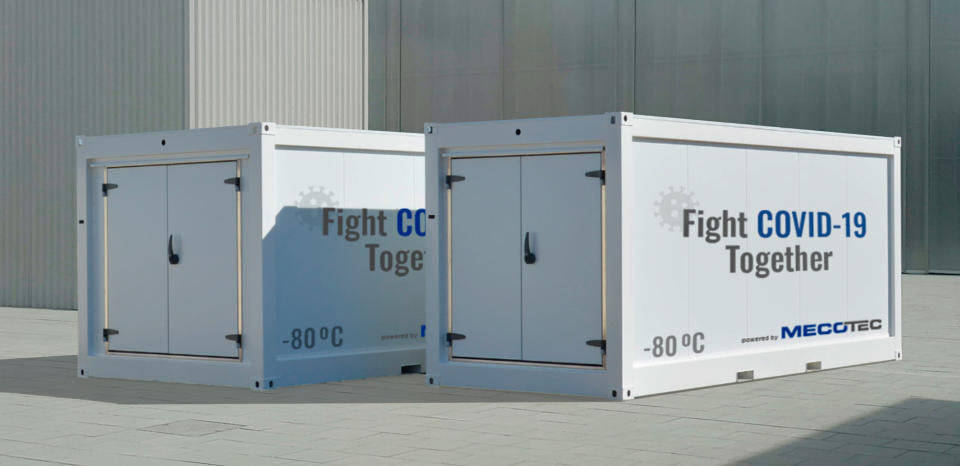
The on-going roll out of the COVID-19 vaccines has created a new focus on reliable backup power for ultra-low freezers (ULFs). Generator Source is seeing market demand for small-to-medium sized new and used diesel generators to provide stable and reliable temperatures in the ultra-low freezers used to store COVID vaccines. Companies are investing in Generator Source’s used industrial generators to keep their vaccine inventory safe when the power grid fails. We are proud to play an important role during this global pandemic as our used industrial generators help millions of people be safely and effectively vaccinated.
COVID-19 Vaccine Storage Considerations
In general, vaccines need to be stored within the manufacturer’s parameters to ensure that they are both safe for use and efficacious upon delivery. Developing manufacturing, transport, and storage parameters is part of the development process for any new drug. As multiple pharmaceutical companies are producing vaccines for the novel Coronavirus 19, the storage considerations vary by manufacturer:
Moderna COVID-19 Vaccine (Frozen): -25°C and -15°C (-13°F and 5°F)
Pfizer COVID-19 Vaccine (Frozen): -80°C and 60°C (-112°F to -76°F)
Johnson & Johnson COVID-19 Vaccine (Frozen): -20°C (-4 °F)
Storing vaccines in a frozen state allows a longer usable shelf life, compared to refrigerated or room temperature storage. Maintaining a supply of vaccines available both doses is essential to the medical supply chain due to the two-dose nature of most COVID vaccines. To maintain the low temperatures required for long-term storage of COVID vaccines, distribution nodes and medical facilities use ultra-low freezers.
What are ultra-low freezers?
Ultra-low freezers (ULFs) are used in medical facilities, hospitals, and laboratories to store materials at temperatures between -45C to -86C*. These freezers typically feature significant insulation and larger compressors than are found on a freezer designed for food use. Additionally, some ULFs have digital temperature displays, data recorders, and/or glass doors for supply monitoring.
Ultra-low freezers are commonly found in the following industries:
Medical / biological research
Vaccine supply chain and delivery facilities
Medical clinics
Research and development laboratories
Tuning fish processing
Many freezers can hold as much as 40,000 – 50,000 microtubes of frozen material and come in a variety of sizes. ULFs in critical research may have active temperature and power monitoring, to ensure the stability of samples inside the freezer. Like most other electronic devices, ultra-low freezers are susceptible to power loss.
Lab Refrigerators and Freezers during a Power Outage
When the power grid goes down at a lab or medical facility utilizing ultra-low temperature freezers, the loss in cooling capability may expose the contents to harmful conditions. Though they are well insulated, ultra-low freezers require electricity to run their cooling compressors and without that power, will slowly begin to warm. If the ULF is being used to store COVID-19 vaccines, the samples could begin thawing and the clock will start ticking for their unfrozen shelf life. In situations where the ULF is storing certain chemicals, hazardous or flammable vapors could be produced during the thawing process. Samples inside the freezers may extremely difficult to replace and in some cases took years of hard work and research to create.
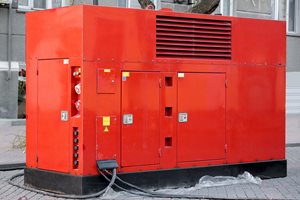
Well-prepared organizations prevent the above negative outcomes by investing in reliable power sources to maintain power continuity during an outage. The most common and reliable backup power source is an industrial diesel generator, paired with an automatic transfer switch (ATS). This equipment combination will sense when there is a grid outage and automatically call the generator to begin producing electricity. The investment in a reliable generator can help prevent the spoilage of COVID-19 vaccines due to power outage.
While hospitals are required by NFPA 110 to have sufficient backup power capacity, smaller clinics and outpatient facilities may not be as well equipped. The NFPA requirements were designed ensure that critical facilities, such as hospitals, have redundant generator capabilities to backup life-safety and sensitive medical systems. Small doctor’s offices are not subject to the same stringent requirements but when utilizing ULFs, may have a need to ensure a stable power source in the event of a grid outage.
Industrial generator backup power systems are necessary for ultra-low freezers operations. Many These freezers use compressors and internal systems to keep the samples safe while the power is on, however, when a power outage occurs, these systems cannot keep the freezer at a cold enough temperature to safeguard the vaccines.* Again, this stresses the importance of having a reliable, used industrial backup generator installed at the freezers location.
How much energy does an ultra-low freezer use?
Since these specialized freezers produce low temperatures, they consume relatively high levels of electrical energy per day. According to a recent Colorado College study, UL freezers consume 15 kWH/day to 32 kWH/day. Per year, the average consumption for a ULF is 3,233 to 6,205 kWH*. These statistics measure the overall power consumption, measured in Kilowatt Hours.
Generator Considerations for ULFs
For the real time requirement, electrical power is measured in Kilowatts (kW). The above daily electrical consumptions initially imply a relatively modest 0.6 – 1.3 kW requirement for ULFs. Additionally, the in-rush current of the compressor must be accounted for, which can add 2-3x the requirement, meaning just the ULF might require 1.2 – 4 kW. Planners must further account for other essential systems that run on the same set of circuits, such as lighting, HVAC, and medical equipment. All of the systems that need to run during an outage need to be accounted for in the capacity of the backup generator to ensure that requirements do not overwhelm the generators capabilities.
The industrial diesel generator market is anticipated to continue growing in demand across the world. The need for uninterrupted power supply during times of weather hardships or power grid downtime is paramount for businesses to thrive in the global economy. Commercial business operations such as data centers, malls, hospitals, construction sites, and dairy farms are highly dependent on consistent power supply. If the event of any grid failure, an installed used industrial generator will ensure the power remains on and operations continue uninterrupted.
Used Industrial Generator Market Growth
There are growing power outage phenomenons occurring across the world due to lack of power generation
equipment being available along with grid maintenance activities not functioning at full capacity. These impacts are influencing commercial installers to use industrial generators as a backup power source. This helps fuel the demand for reliable power backup solutions for used industrial generators.
The market is experiencing a growing gap between reliable power generation and available power supply which results in power outages. These factors influence a forecasted increase in demand of industrial used generators over the next 8 years. Additionally, increased power cuts and voltage fluctuations adversely affects industry operations. This forces businesses to invest in industrial generators for reliable backup power to help reduce any operational down time during power outages.
The need for reliable backup power outside of the grid will further augment the demand for used industrial generators over the forecasted period. North America is forecasted to have the largest demand for industrial generators due to the ongoing increases in commercial establishments across diverse emerging markets such as cannabis farms. The Asia Pacific region is forecasted to be the fastest-growing global region in power creation due to rapid urbanization and industrialization of their economies.
The global generators market is expected to be valued at US $21.23 billion in 2019 and is projected to expand at a CAGR of 6.3% during the forecast period 2020 – 2028
Factors Driving Growth For The Used Generator Market:
Grid fragility: 2021 Winter Storm Uri overwhelmed ERCOT natural gas power plants and wind turbines, causing rolling blackouts across Texas (Houston, Dallas, Austin). This situation highlights the speed and spread that an electrical outage can have. The same can be true of hurricanes, tornadoes, heat waves, and floods.
Business owners need power solutions quickly: the time to purchase a used generator should happen before an outage. Getting a backup generator placed, tied in by an electrician, and fueld with off highway diesel takes time.
Used generators in response to a storm: ordering a new industrial generator from a manufacturer (e.g., Caterpillar, Cummins, Generac) generally comes with multi-week queues to wait for the generator to be produced. In-stock used industrial generators provide a short cut to waiting on a manufacturer to build a generator.
Owning a diesel generator secures power source: installation of a used diesel generator allows a business to secure the source of power during a grid outage. This insulates the business against disruptions in both the electrical grid and natural gas supply.
Modern business practices need reliable power: from on-site computer servers to refrigeration to sensitive manufacturing processes, 21st century businesses require stable electricity to operate effectively and efficiently.
Well maintained generators remain capable for 20-40 years: because emergency backup generators rarely operate (outside of regular exercises and testing), their engines and generator ends retain much of their value and capability over time. When properly serviced and inspected by professional technicians, a diesel generator can remain capable for 20-40 years.
Portable Generator Market
With the emergence of natural fuel sources, it’s forecasted to provide opportunities for the portable
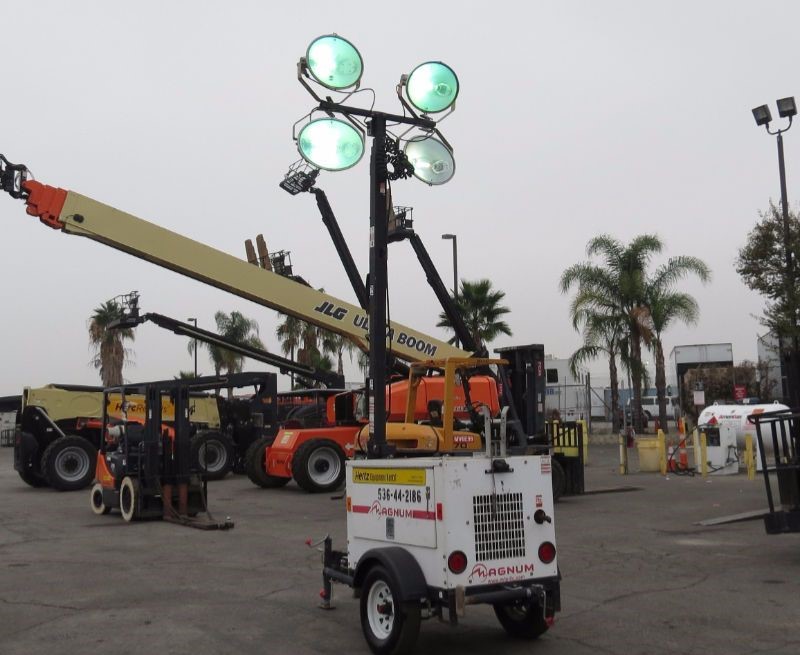
generator market to also grow. This market segment is projected to reach USD $2.9 billion by 2028 with a CAGR of 4% over 2020-2028. High growth economies for used portable generators include China, Indonesia, South Korea, and India. Diesel fuel type is expected to have the highest CAGR between 2020 – 2028. The economical price of gasoline powering used industrial portable generators will remain a major demand factor for the global generator industry.
The diesel fuel type allows the industrial generator to have a longer life while providing heavier kW outputs than alternative fuel sources. The industries that commonly use diesel portable generators include construction, gas/oil, and mining industries. The residential market segment for portable generators is expected to be the fastest-growing end-use market.
To discuss your next used industrial generator investment please contact the highly experienced team and Generator Source today!



/Use-Section-179-Deduction-For-Huge-Tax-Savings-For/Depositphotos_52895029_l-2015.jpg.aspx?width=500&height=288)
/Use-Section-179-Deduction-For-Huge-Tax-Savings-For/Depositphotos_2284180_l-2015.jpg.aspx?width=400&height=265)